EN
EN ES
ES PT
PT SV
SV DE
DE TR
TR FR
FR SW
SW AR
AR RU
RU KO
KO
Whether you’re inflating tires, operating tools or applying a fresh coat of paint, portable air compressors can make life easier on more occasions than many people realize. They are small enough to be portable but capable of dealing with a variety of everyday tasks. Whether you’re working on your home or in the garage, it’s likely that at some point you’ll need an air compressor. It’s not a full garage setup, and that’s perfect for people who need reliable power on the go. In this article, we’ll discuss some of the most popular ways people are using portable air compressors and how they can take the legwork out of difficult projects.
Best air compressor for construction
Not all air compressors are created for construction work. Job sites are gritty and chaotic, and they require tools that can handle either. The need of a good air compressor for construction is that it should be powerful, durable, and easily transportable. Whether it’s framing out walls, putting a new roof on a house, or running heavy duty nailers, having the right compressor can give the professional the fast, safe, and effective performance needed to get the job done.
One of the best options for construction is a gas-powered portable compressor with a large tank at least 6 gallons and a high PSI (90 PSI or higher). These types are excellent because they don’t depend on electricity is a great option for outdoor or remote job site where power may not be available. And they are designed to accommodate multiple tools at once, such as nail guns, staplers and spray guns. The kind with cast iron pumps and metal frames tend to hold up better under daily use.
For indoor or finished spaces, electric compressors can be a quieter, cleaner choice. While the latter won’t pack the same raw power as gas models, some heavy-duty electric alternatives can still manage framing and roofing tools. Depending on the model, the cord is likely to be between 25 and 35 feet. Just be sure to be close to a reliable power source and to use a heavy-duty extension cord rated for the unit.
Example: A builder doing a home remodel might want a wheelbarrow-style gas compressor to run two framing nailers at the same time. Its mobility allows them to roll it across difficult terrain, and the high air output enables an immediate shot-to-shot firing rate. For indoor projects, they may upgrade to an electric twin-stack compressor for finish work, quieter and cleaner, but still powerful enough to drive finish nails without stalling.
Ultimately the best construction air compressor will be whatever works for the job size, power needs, and your mobility needs. Be sure to compare air tool requirements with the compressor ratings before you make a purchase.
Best industrial air compressor
You need an air compressor that's been engineered to last and built to withstand the aggressive working environment of an industrial operation. These machines run everything from the gear in manufacturing tools to automated systems, and downtime is not an option. The top industrial air compressors are built for 24/7 operation and to produce plenty of power, while still being efficient with electricity. Whether you’re working with a production line, CNC machines, or an entire workshop of power tools, your compressor needs to be able to keep pace without overheating or dropping pressure.
Commercial or industrial air compressors are typically available in rotary screw and reciprocating piston designs. Two-stage The rotary screw compressor is recommended for nonstop use. They’re also quieter and more efficient, and require less maintenance over time. They are commonly used in factories, auto plants and other high-demand settings. Piston compressors, on the other hand, are a better fit for a shop that demands to burst a lot of air, but in a much shorter time-frame. They are durable, cheaper and easier to maintain.
When selecting a model, you’ll want to focus on the CFM (cubic feet per minute) and PSI (pounds per square inch). You’ll also want a tank size that fits your usage — larger tanks have more reserve air and make the system operate more smoothly. For larger operations, two-stage compressors which compress air twice before storing it, provide even higher pressure and efficiency.
Example: A woodworking shop that runs multiple pneumatic sanders or other air tools could use something this size even if they run an air sander, says McCarty; and you won’t have to wait for the compressor to supply sufficient pressure. This system Allows consistent air to all stations with no loss of air pressure. A two-stage 10 HP piston compressor (60-gallon tank) probably makes more sense for a machine shop, durable, powerful, and more maintenance friendly.
The bottom line then is that there is no “best” industrial air compressor that would depend on how demanding and load-intensive your work is, and how many hours you use your machine on a daily basis and the tools or machines you run. You always want to purchase a machine slightly more powerful than you currently need to avoid overworking the system.
Mining compressor
Compressors are an integral part of mining tools and equipment, especially when transporting air underground. A mining air compressor is essentially described as a heavy-duty industrial compressor that is intended to be used non-stop for long periods of time in dusty environments. So for drilling, blasting rocks, power pneumatic tools, or to operate the ventilation system in an underground mine, proper compressors keep the work going without any issues or incident. These machines must be reliable, tough and capable of handling high pressure for long stints at a time sometimes in hot, dusty or damp underground conditions.
Compressors at the mines are diesel-driven or electric. Diesel variants are utilized more in underground module or surface applications where access to electricity is not feasible. They are mobile, powerful and do not need an outside source of power. On the other hand, in underground mining where air quality is essential for operations, electric mining compressors are frequently employed. They emit no exhaust fumes and can be operated continuously with proper ventilation and safety devices.
One of the factors you’ll want to pay attention to is a high CFM (cubic feet per minute) and high PSI output. Not to mention that mining equipment needs a constant and powerful blast of air to operate jackhammers, rock drills and in some cases, entire air systems in tunnels. Many mines also employ rotary screw compressors, which are efficient, relatively quiet (piston types are louder) and can run all day without overheating. Some compressors feature sophisticated controls that modulate airflow according to what’s needed, which while your bracelet is nice, could save fuel or energy.
Example: A rotary screw compressor powered by a diesel engine in a gold min ing operation might be used to drive drill rigs and dust suppression systems. It is workable either from a truck/trailer or securely mounted on the site. In a coal shaft, an electric compressor with inbuilt dryer system could be used to operate rock drills and ventilation without introducing atmospherically harmful emissions to an enclosed space.
If you want to keep mining compressor running smoothly, a regular service is necessary especially for those mining compressors in the dust, and high temperatures. Routinely replace clean filters, check oil levels, and inspect hoses and connections. Downtime is not only expensive in mining, it’s dangerous, so your compressor needs to be able to perform reliably and without pause.
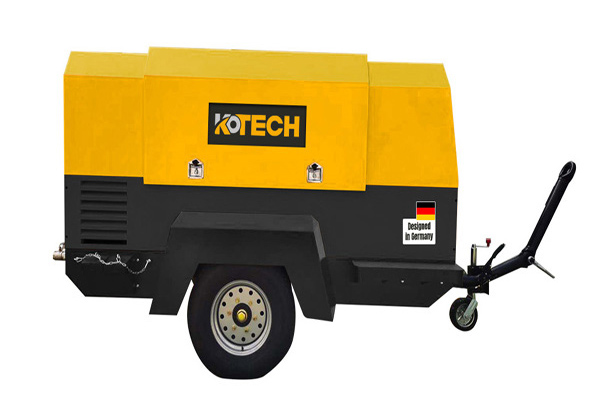
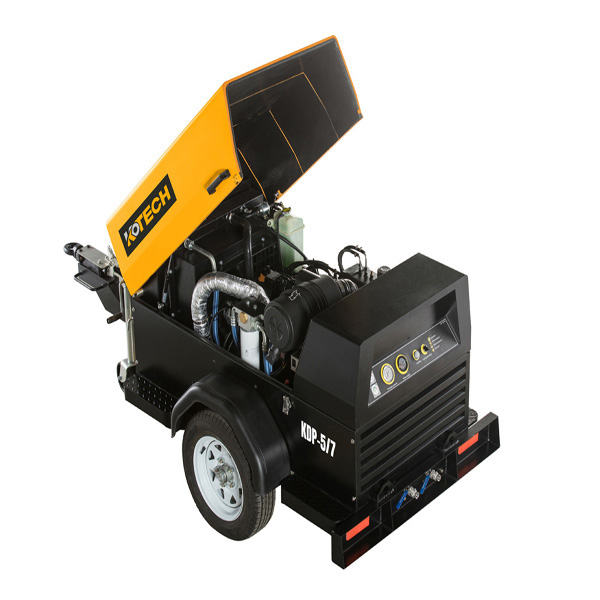
Industrial portable air compressor
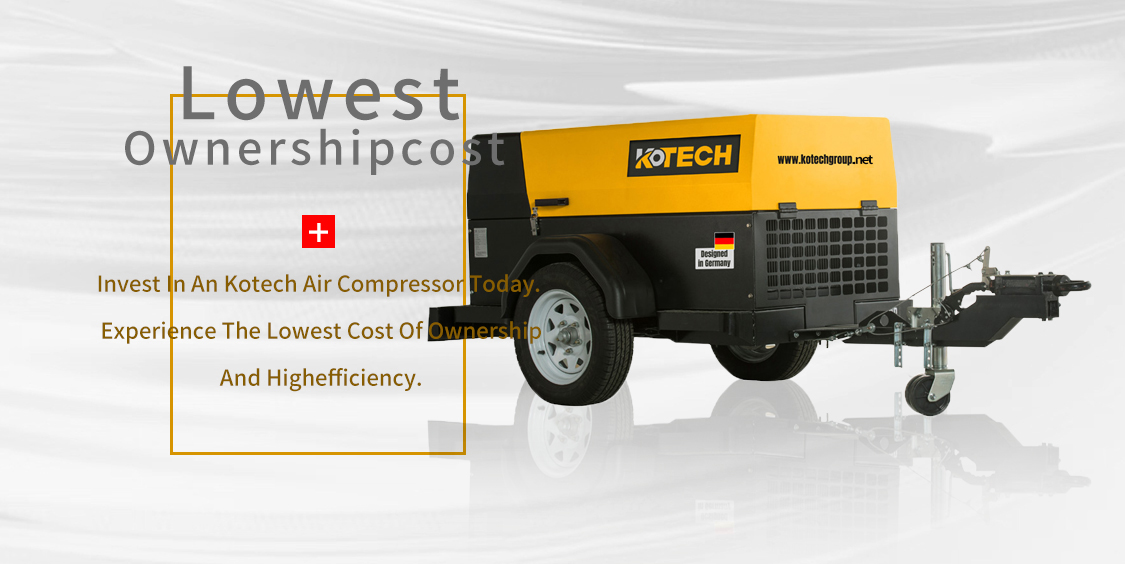
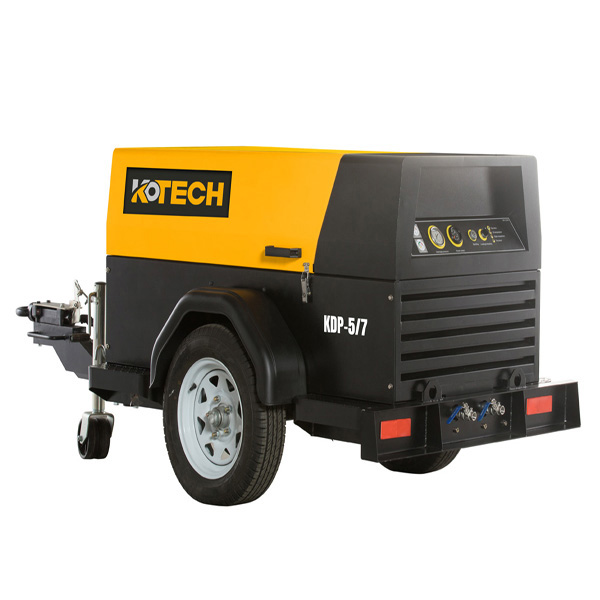
An industrial portable air compressor, when combined with the professional quality strength of work required for heavy duty tasks, is also one that can be movable from one side to another. Crucial in industries such as construction, manufacturing, oil and gas, mining and large-facility maintenance basically anyplace where a strong, steady stream of air is needed at multiple sites. They provide the performance of stationary industrial models but with the added benefit of portability provided by mounting on wheels, skids, or trailers.
By and large, industrial portable compressors are diesel powered, because they are used in places not all electricity grows on trees. They’re built to be on all day, running the most power-hungry tools, like sandblasters, pavement breakers, drills and huge pneumatic wrenches. You can find these large compressors on construction sites, remote mining outposts, and oilfields essentially anywhere that needs huge, mobile air output.
For jobs that do not require such power there are electric portable compressors too. They are employed in factory environments and work shops where limited mobility is required, and indoor air quality and noise control are concerns. Electric models, which are quieter and cleaner, often need a powerful and stable power source.
A few of the top features that you should focus on in an industrial portable air compressor:
● High CFM Volume (can run multiple tools)
● High PSI rating (for tasks that necessitate strong pressure bursts)
● Sturdy construction (steel frame, weather resistant housing)
● Cooling systems to prevent overheating
● Onsite service access for ease of maintenance
Example: A road maintenance crew would run jackhammers and blow out debris from pavement cracks with a trailer-mounted diesel compressor. Then, when they complete one section, they tow it to the next job. In a large factory, a wheeled electric unit may be used to carry the machine and supply air for maintenance of machinery and painting.
Before you pick a unit, determine what the total air demand of the tools you plan to use is going to be. Overloading causes pressure loss in a compressor and reduces its service life. And, it’s better to err on the side of a slightly larger unit than the one that just barely serves your needs.
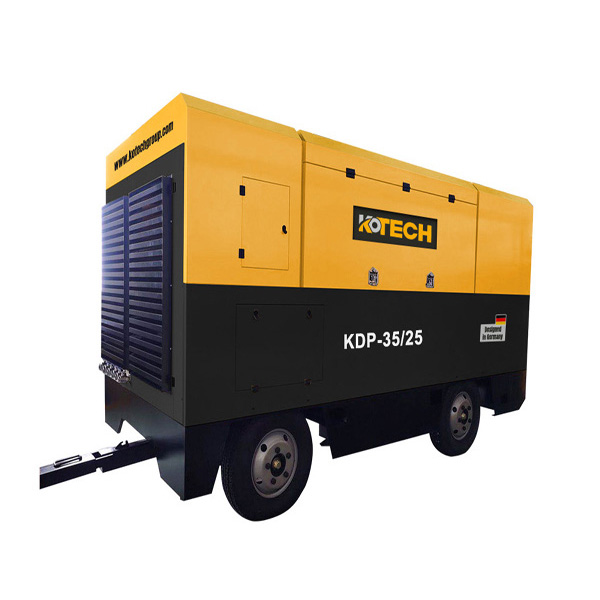
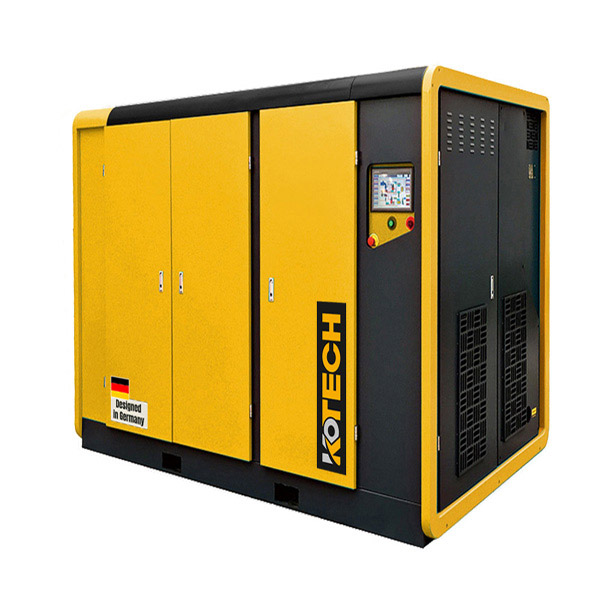
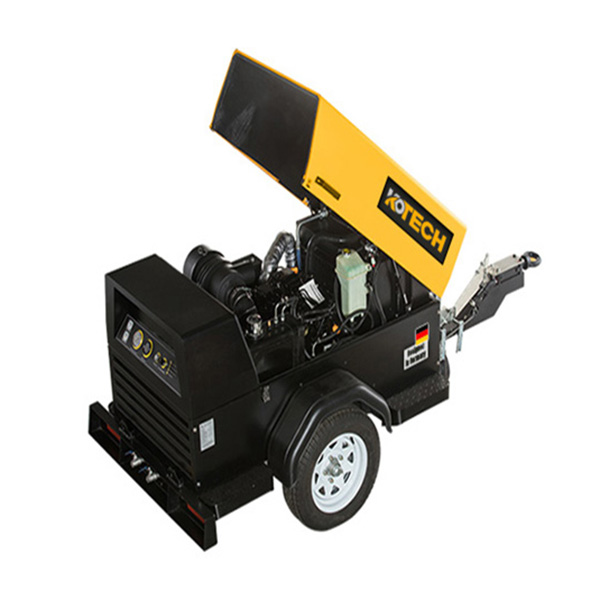
KOTECH, as a pioneer British air compressor brand, global leader in air compressors and its spare parts manufacturer with total integrated digital technology and is proud to provide a wide range of compressors from 5.5KW-630KW,0.69m3-120m3,2bar-200bar, mining equipment and spare parts.